Journal / Water knowledge
Understanding hydrogen water
What dissolved hydrogen means, how concentration is expressed and how to select it in Atelier.
What hydrogen-rich water means.
Hydrogen-rich water contains dissolved molecular hydrogen. Its concentration is expressed as an amount in a volume of water, such as milligrams per liter.
Serving size and concentration describe different parts of the glass: how much water you choose and the hydrogen level selected for it.
H₂, H₂O and CO₂ are different things.
The hydrogen bound into a water molecule, H₂O, is different from dissolved molecular hydrogen, H₂. Sparkling water uses carbon dioxide, CO₂. These describe different molecules and different choices in a drink.
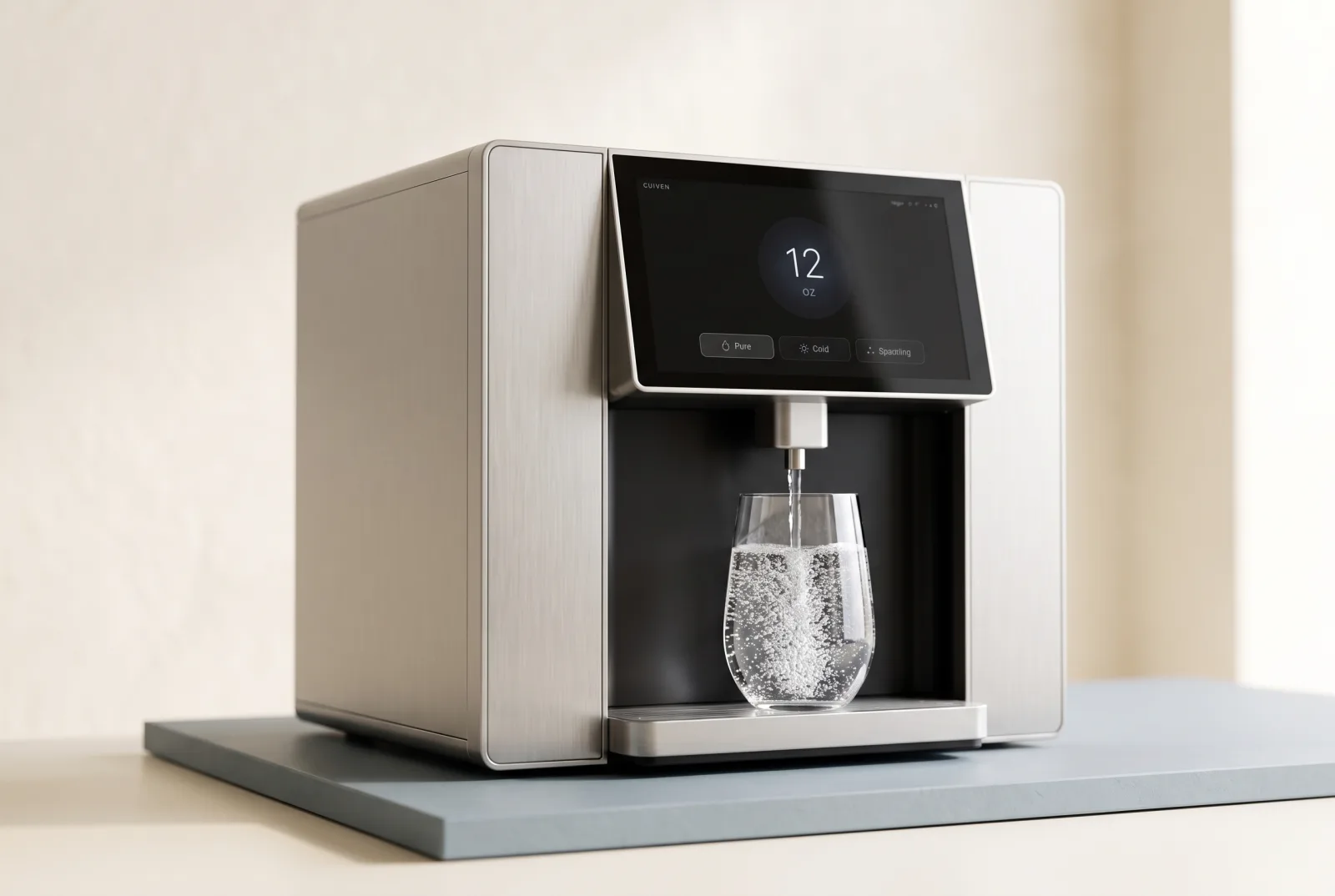
Atelier gives hydrogen and carbonation separate controls. Hydrogen is paired with chilled still water, while the Sparkling setting adjusts carbonation.
Read concentration and serving size together.
Concentration describes an amount per volume. Multiply a concentration in milligrams per liter by the serving volume in liters to calculate the dissolved amount represented by those numbers.
For a simple example, 1 mg/L in a 250 mL glass corresponds to 0.25 mg. The same concentration in 500 mL corresponds to 0.5 mg.
| Example concentration | Serving volume | Calculated amount |
|---|---|---|
| 1 mg/L | 250 mL = 0.25 L | 0.25 mg |
| 1 mg/L | 500 mL = 0.5 L | 0.5 mg |
Keep the measurement conditions attached.
For any measured dissolved-gas concentration, ask where the sample was taken, how long after preparation it was tested and which method was used. A setting, a measurement at the outlet and a later measurement in a glass describe different points in the process.
This is also how to read a research protocol: preparation, timing, serving volume and measurement belong together. The methods section is often more informative than a concentration quoted on its own.
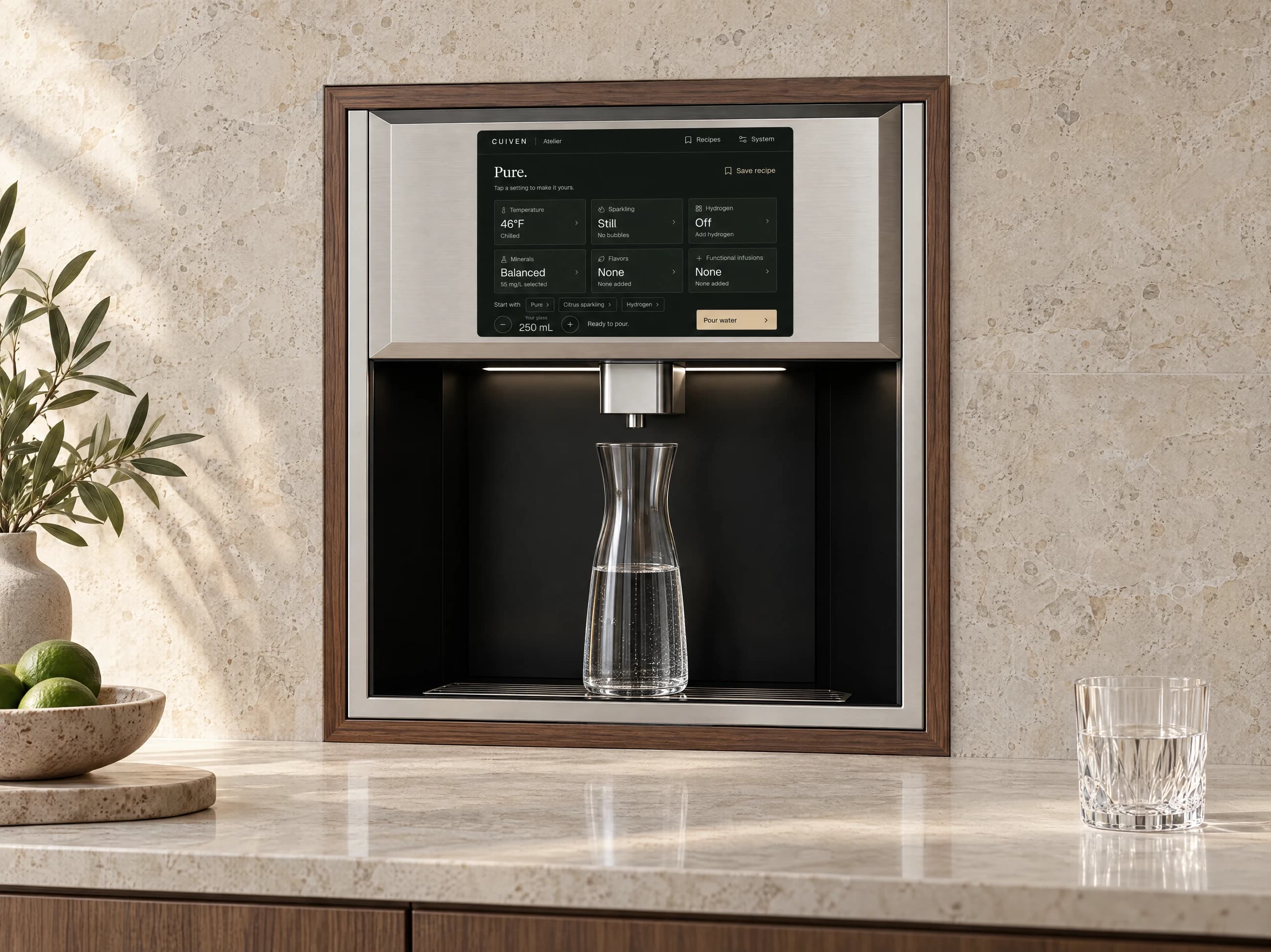
Select hydrogen in Atelier.
Open Hydrogen from the home screen and choose a concentration target. Set your serving size, review the drink and pour. Hydrogen pairs with chilled still water; carbonation has its own separate control.
Save the selection as a recipe to keep the hydrogen target, volume and other drink settings together.
Read the numbers in context.
When comparing hydrogen-water information, look at the concentration, serving volume, timing and measurement method together. Those details explain what a result describes.
For scientific research, read the participants, comparison group, duration and outcomes. The cited randomized trial followed 60 adults with metabolic syndrome for 24 weeks; that context belongs with its findings.