Journal / Making a choice
Choosing a shower filter
Consider filtration, the fit in your shower and everyday care together.
Start with what the filter is for.
A shower filter, a drinking-water filter and a water softener perform different jobs. A long list of media is not enough to tell you how an assembled shower product performs.
The first question is a specific one: what has this model been shown to reduce, at what flow and for how long?
Contact time makes the flow rate matter.
A useful engineering measure for a media bed is empty-bed contact time: bed volume divided by water flow. It relates how much space the media occupies to how quickly water moves through the system.
As a calculation example, a 0.5-liter bed at 10 liters per minute has an empty-bed contact time of 0.05 minutes, or 3 seconds. At twice the flow, that time halves. This calculation describes geometry and flow; the reduction claim still comes from testing the assembled product.
| Example bed volume | Example flow | Calculated contact time |
|---|---|---|
| 0.5 L | 10 L/min | 3 seconds |
| 0.5 L | 20 L/min | 1.5 seconds |
| 1 L | 10 L/min | 6 seconds |
What each filtration stage contributes
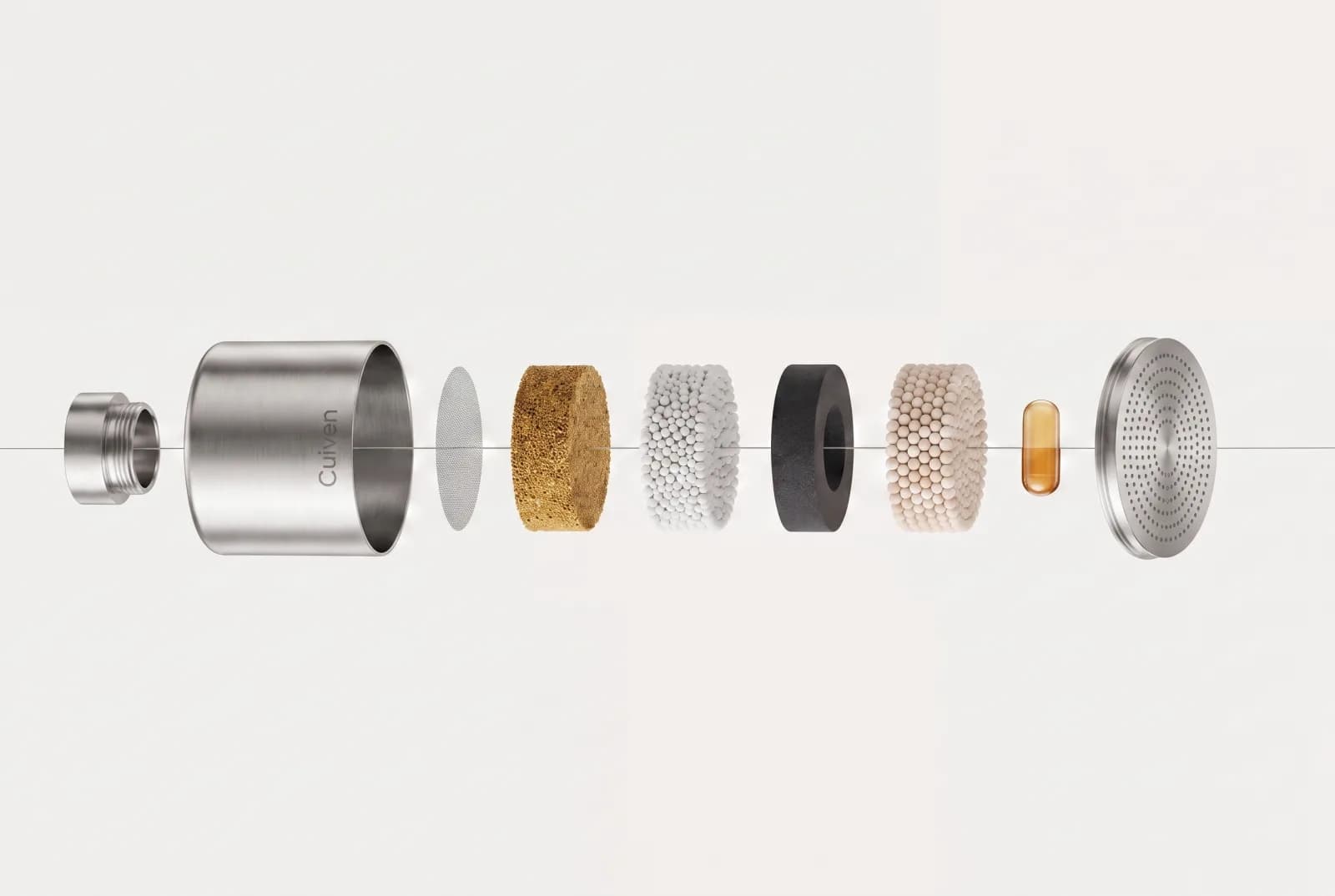
Activated carbon has a large internal surface area for adsorption. Its capacity depends on the carbon and the substance being treated, and other substances in the water can compete for that capacity.
A stage count does not explain those differences. Look for what each stage does, the flow through the complete system and the replacement schedule attached to its claim.
Separate filtration from softening.
Hardness is mainly dissolved calcium and magnesium. Heating hard water can produce scale. Softening and chlorine reduction address different properties of the water, even when both are relevant to the same bathroom.
When scale is the concern, ask specifically how the proposed treatment addresses hardness. When the concern is a disinfectant, identify the disinfectant and the matching reduction claim.
Know what the standard covers.
NSF/ANSI 177 addresses shower filtration for aesthetic free available chlorine reduction, along with product requirements. A chlorine claim should not be expanded into a claim for chloramine, hardness, PFAS or every other substance in the water.
Keep hardness separate.
Water hardness is largely dissolved calcium and magnesium. It can contribute to scale and affect how soap behaves. A chlorine-reduction claim does not establish that those minerals have been removed.
Consider the installed experience.
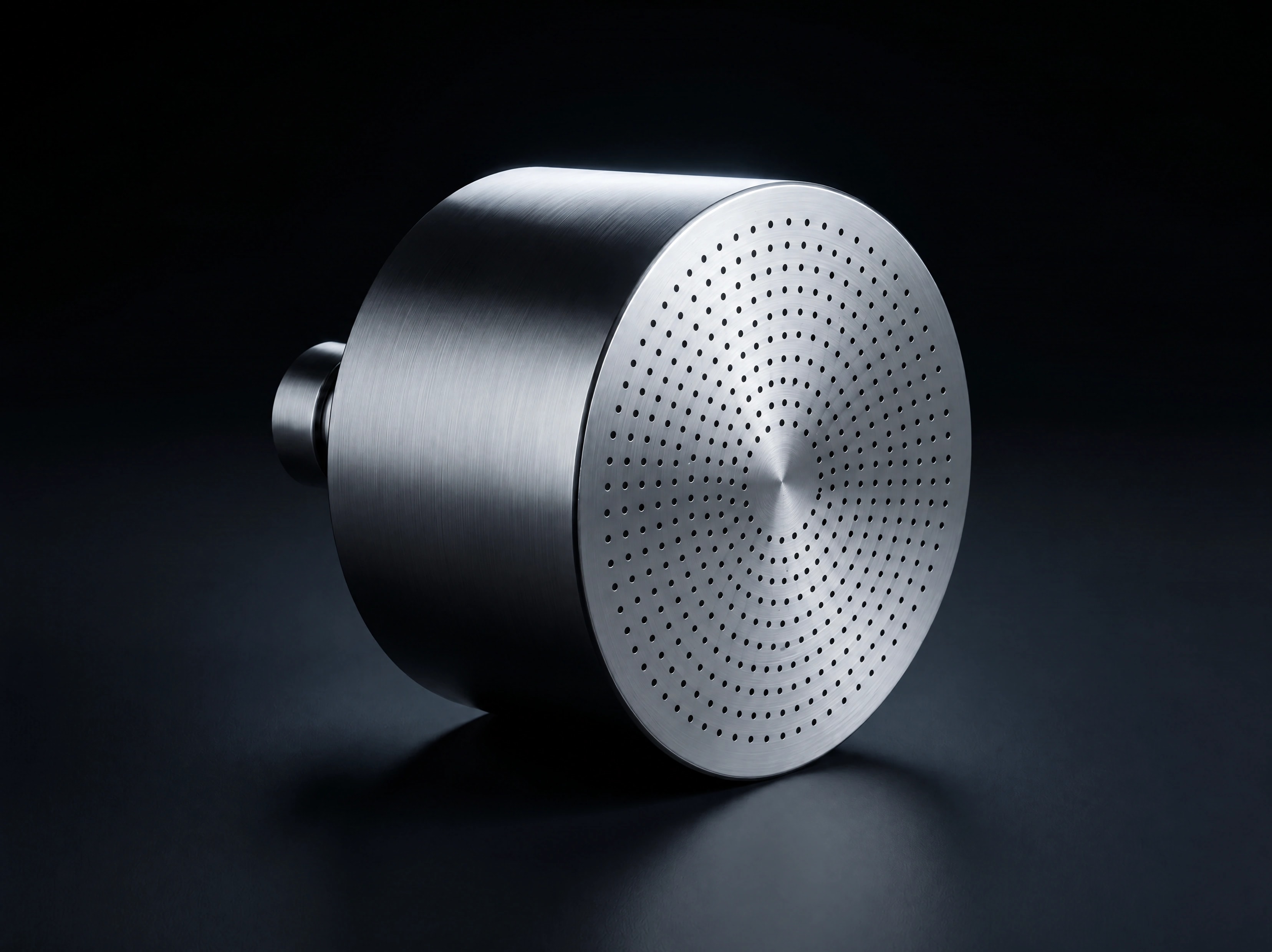
For Monolith, choose between the ceiling mount and purpose-built bent wall arm, then consider the cylinder’s position and cartridge access within the shower plan.
- The exact model, replacement cartridge and its reduction claims.
- Flow and pressure requirements for your installation.
- The supported mounting assembly and installed weight.
- Access for cleaning and cartridge replacement.
- Replacement cost and the service interval.